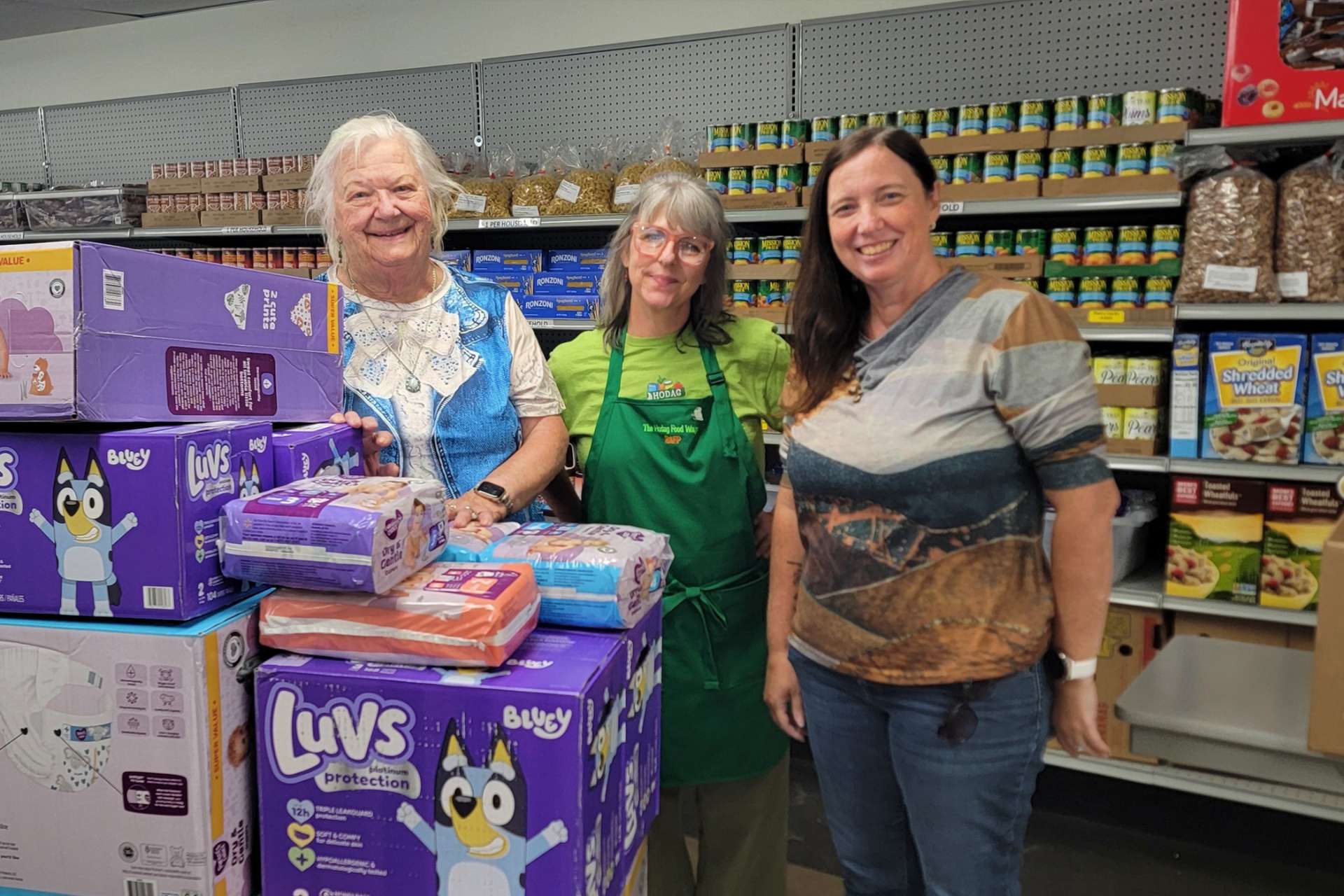
Meet Hunger Relief Federation Member Rhinelander Area Food Pantry
Hunger Task Force is the founding member of the Hunger Relief Federation, a statewide network of independent food banks and food pantries working together to strengthen hunger relief efforts across Wisconsin. One of the federation’s longtime members, the Rhinelander Area Food Pantry (RAFP), has spent the past 20 years addressing food insecurity in Wisconsin’s Northwoods. The pantry serves a county of roughly 8,400 residents and provides food assistance to nearly 1,700 people, which is about one quarter of the local population. Its work is supported by approximately 450 volunteers who contribute an estimated 14,000 hours each year, and nearly 90% of its budget comes from local donors.
Courtney Smith became the pantry’s first full-time employee as COVID-19 began reshaping life in rural communities. In Rhinelander, tourism drives much of the local economy, but it does not always provide long-term stability. Seasonal hospitality and service jobs often come with unpredictable hours and limited benefits, which makes it difficult for families to plan beyond the next paycheck. The decline of factory and forestry work, combined with an aging workforce now averaging nearly 50 years old, has left many residents underemployed.
“Many of the families we serve fall into what’s called the ALICE category – Asset Limited, Income Constrained, Employed,” Courtney said. “They’re working and contributing to the community, but their income doesn’t stretch far enough to cover basic monthly needs.”
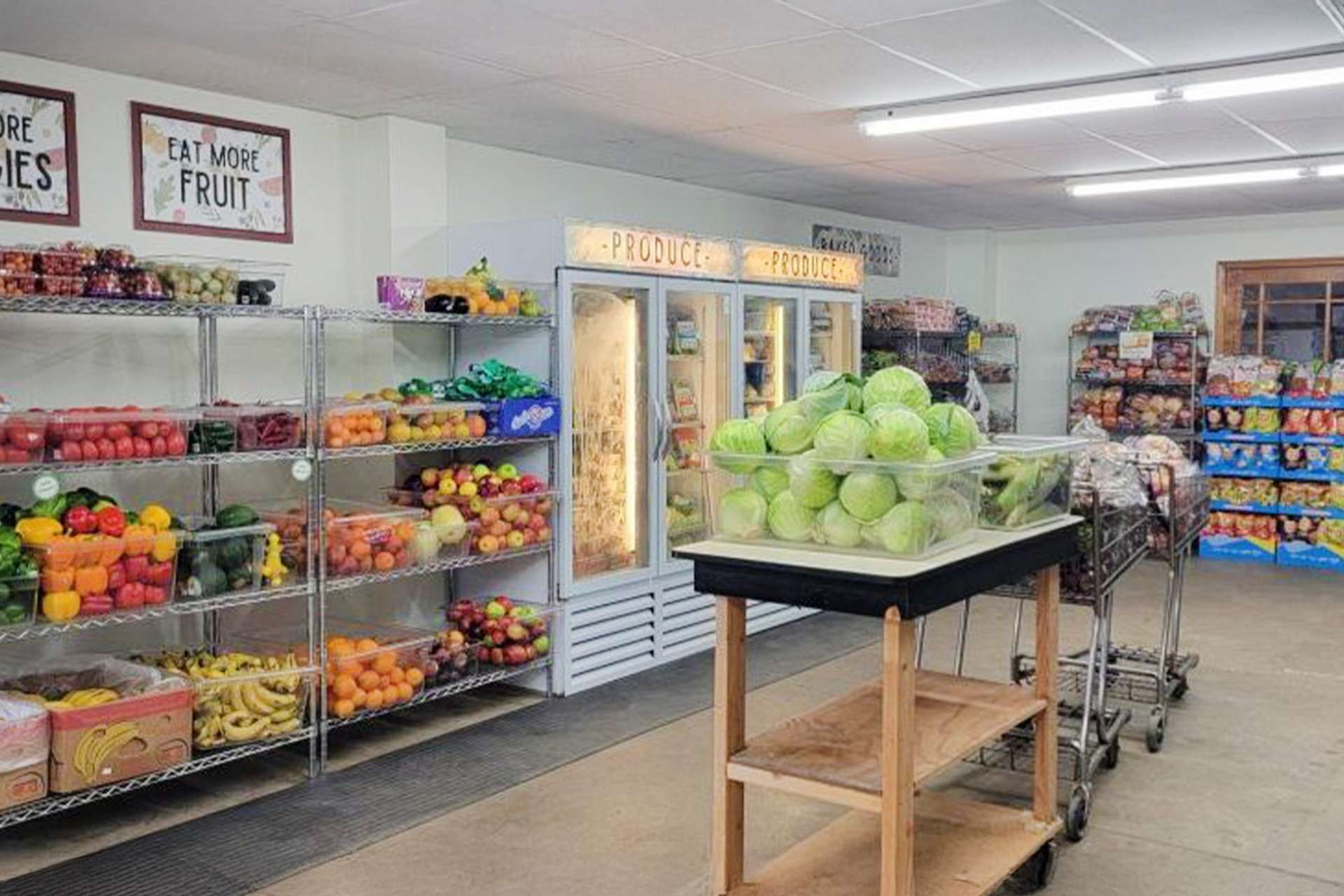
RAFP’s approach centers on dignity, choice and access. “Customers can actually touch their own food like they would in a grocery store,” Courtney said. The pantry is designed to feel like a neighborhood market – an intentional shift meant to reduce stigma and reflect how people prefer to shop. RAFP offers three shopping days each week, including home delivery for homebound residents and an online ordering system now used by nearly 30 percent of households served.
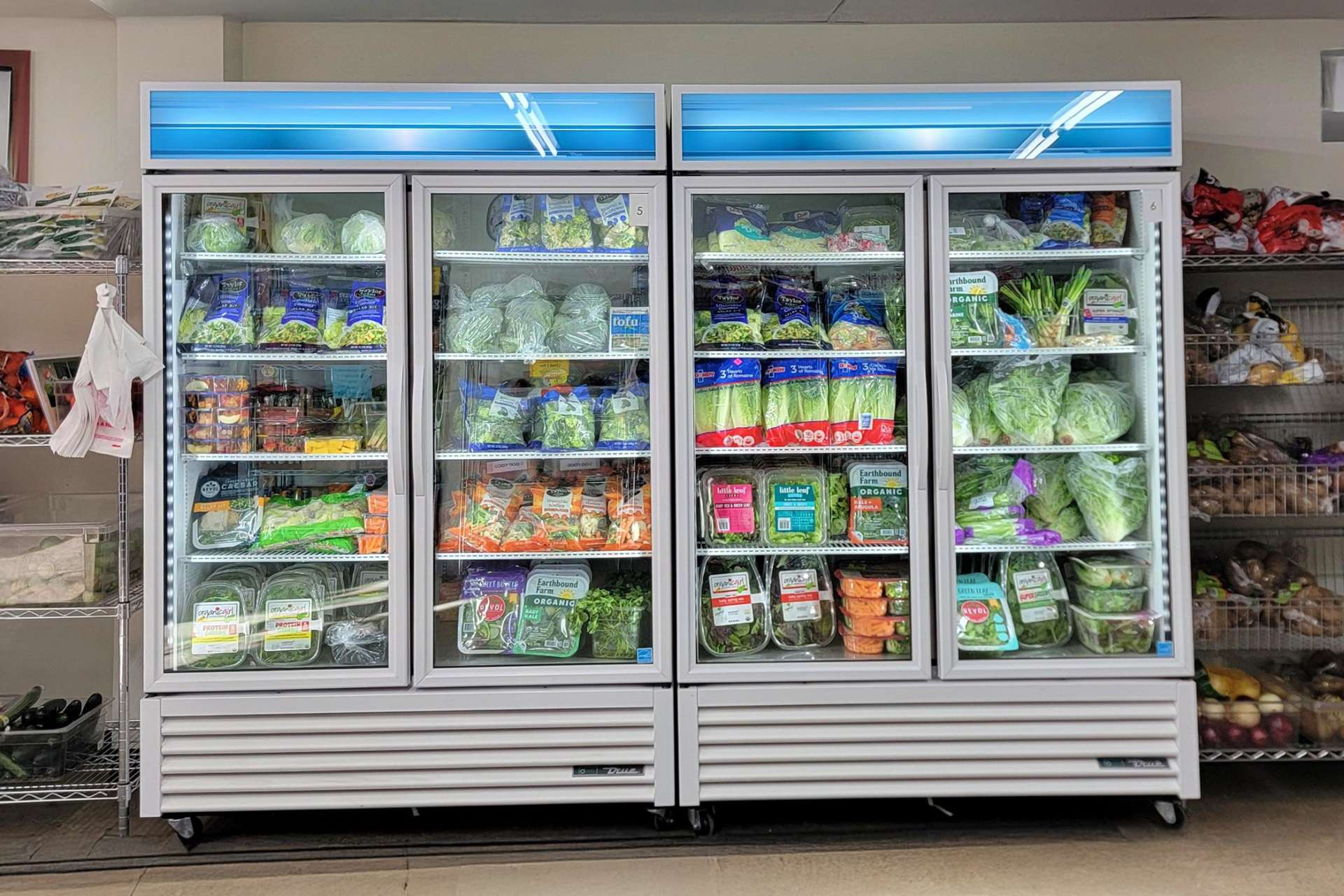
The pantry has also made significant investments in its physical infrastructure. Through support from the Hunger Relief Federation and the TEFAP Reach & Resiliency federal grant program administered by Hunger Task Force, RAFP replaced aging refrigeration equipment that had become costly to maintain. “The new glass-door coolers have reduced monthly electricity costs by roughly $300, allowing those funds to be redirected toward food and programming rather than repairs,” shares Courtney.
Operating in a rural community presents its own challenges. “What works in Milwaukee is always so inspirational, but it doesn’t work here,” Courtney said. With guidance from the Hunger Relief Federation, RAFP can access practical tools, connect with peers and influence policy decisions to ensure the Northwoods community receives support tailored to its specific challenges.
For more information about the Hunger Relief Federation, which connects anti-hunger advocate partners throughout the state to combat hunger region-by-region, visit www.HungerTaskForce.org/federation.