Yowela Farms Brings Indigenous Food Traditions to Hunger Task Force
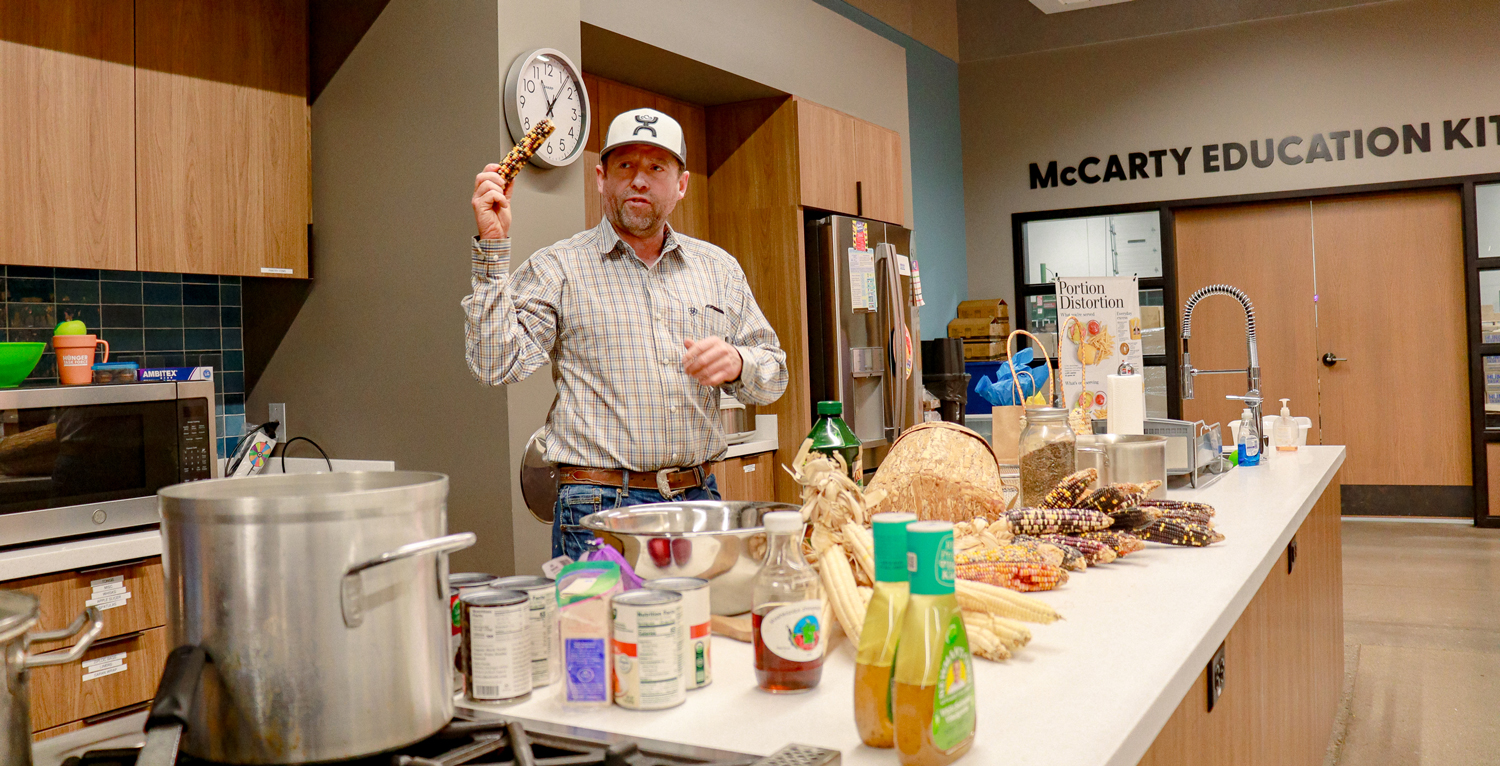
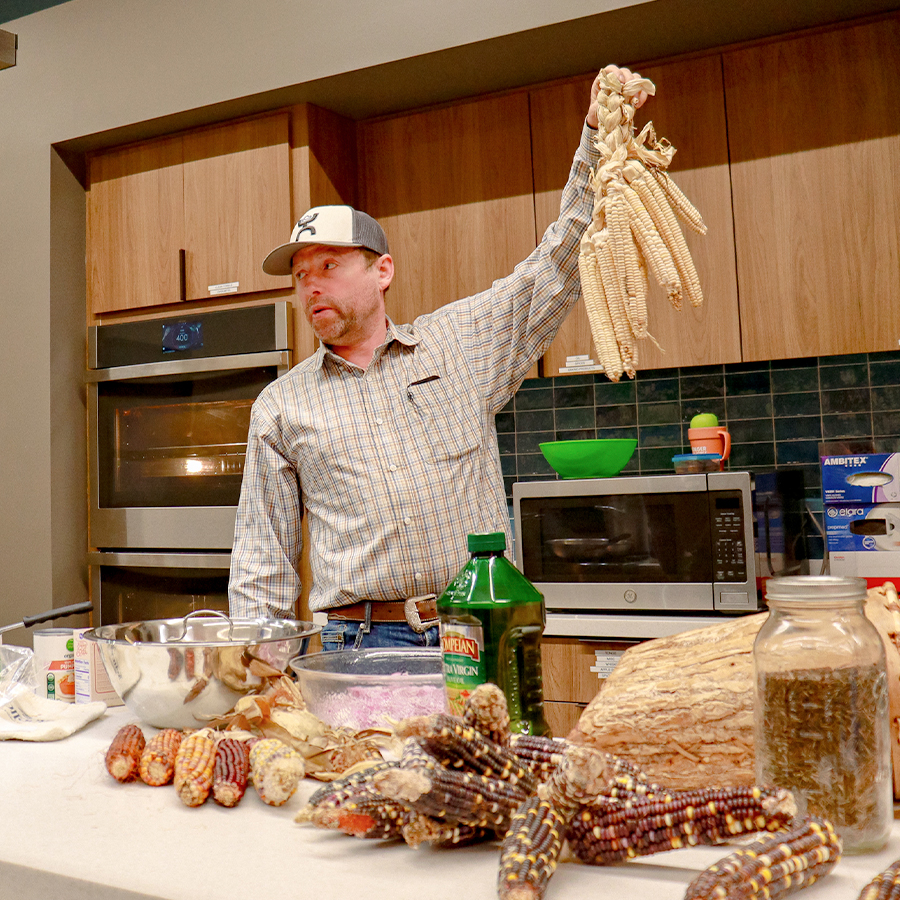
Hunger Task Force recently welcomed Dan Cornelius, a member of the Oneida Nation and founder and operator of Yowela Farms, to its McCarty Education Kitchen for a conversation about Indigenous food systems, food sovereignty and traditional foods as medicine.
Yowela Farms takes its name from the Oneida word Yowela’talíh^ meaning gentle wind. The farm focuses on growing Indigenous crops using regenerative farming practices. Located near Stoughton, Wisconsin, Yowela Farms produces and grows Indigenous corn varieties, wild rice, pasture-raised meats, eggs and traditional maple syrups.
During his visit, Dan led a cooking demonstration for Hunger Task Force staff using traditional ingredients. He prepared Three Sisters soup, corn mush and wild rice. Known as the Three Sisters, corn, beans and squash are traditionally grown together because they support one another in the field – corn provides structure for beans to climb, beans enrich the soil with nitrogen and squash protects moisture and soil health.
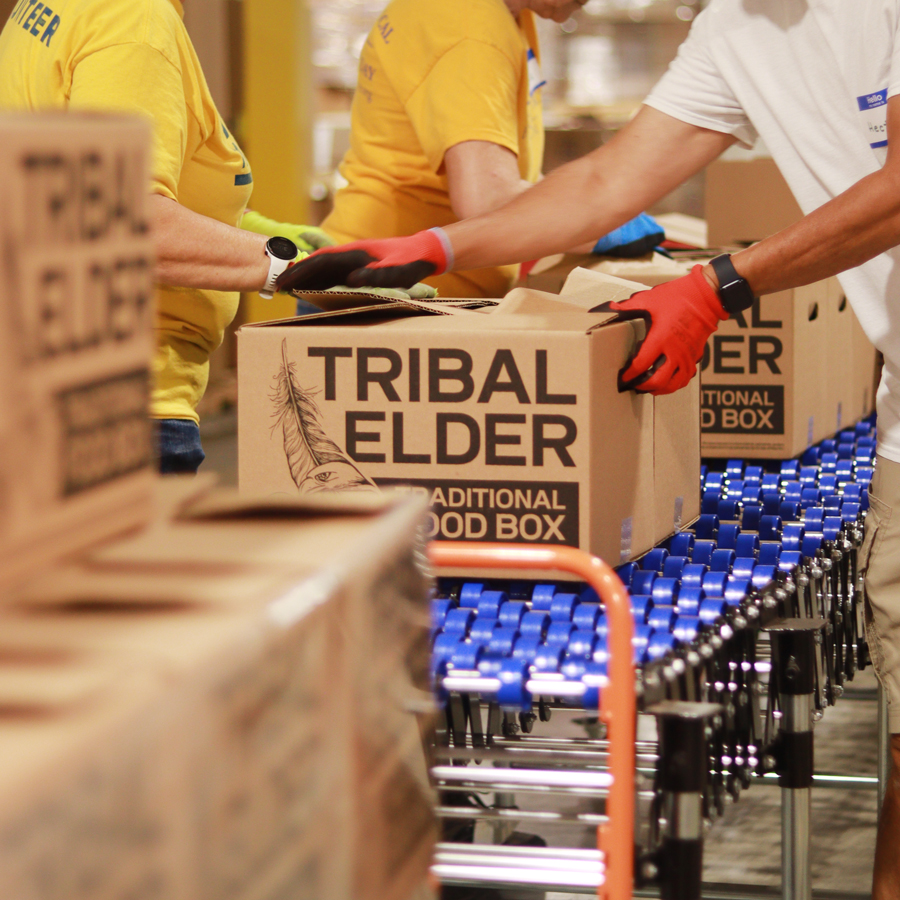
The visit also highlighted Hunger Task Force’s partnership with Indigenous producers through the Tribal Elder Traditional Food Box Program. Hunger Task Force distributes monthly food boxes with culturally meaningful foods to tribal elders across four community sites in Milwaukee. The program reconnects elders with traditional foods and strengthens access to culturally relevant nutrition.
To support the program, Hunger Task Force purchases directly from Indigenous farmers across the region.
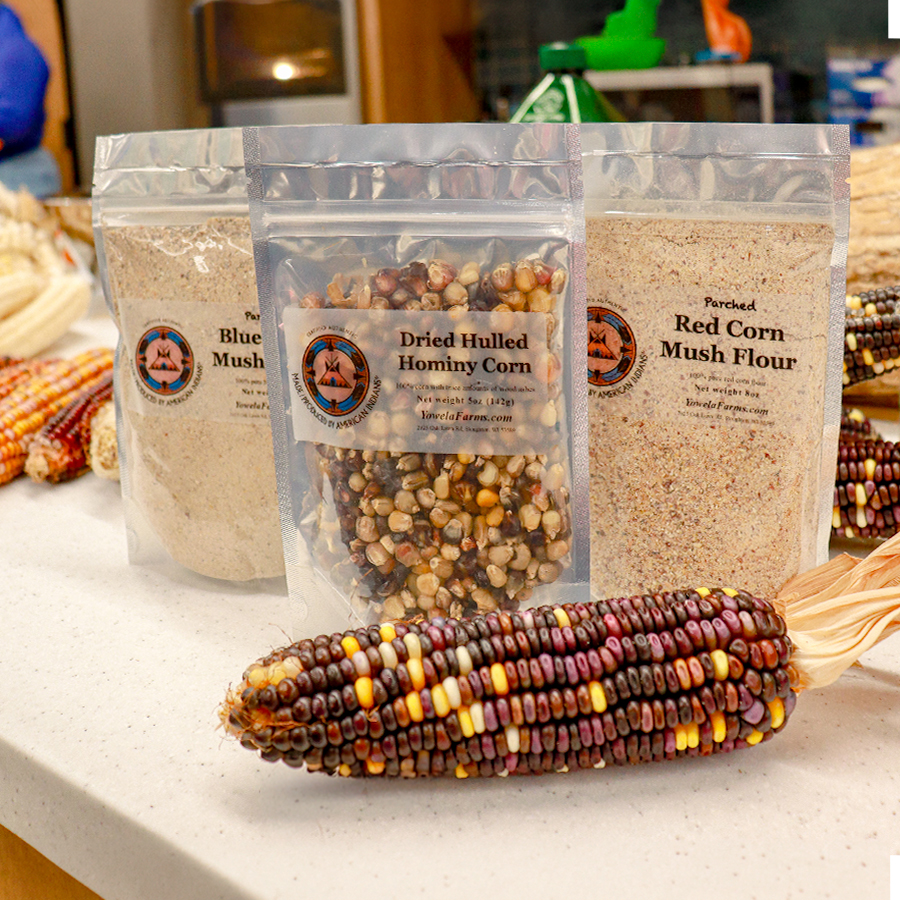
Over the past several months, Hunger Task Force has purchased food from Yowela Farms to include in the Tribal Elder Traditional Food Boxes, including:
- Blue corn mush flour
- Red corn mush flour
- Dried hominy
Through the Tribal Elder Traditional Food Box Program, Hunger Task Force has invested more than $315,000 since June 2024 in Indigenous food producers, strengthening regional food systems while supporting cultural food access for tribal elders.