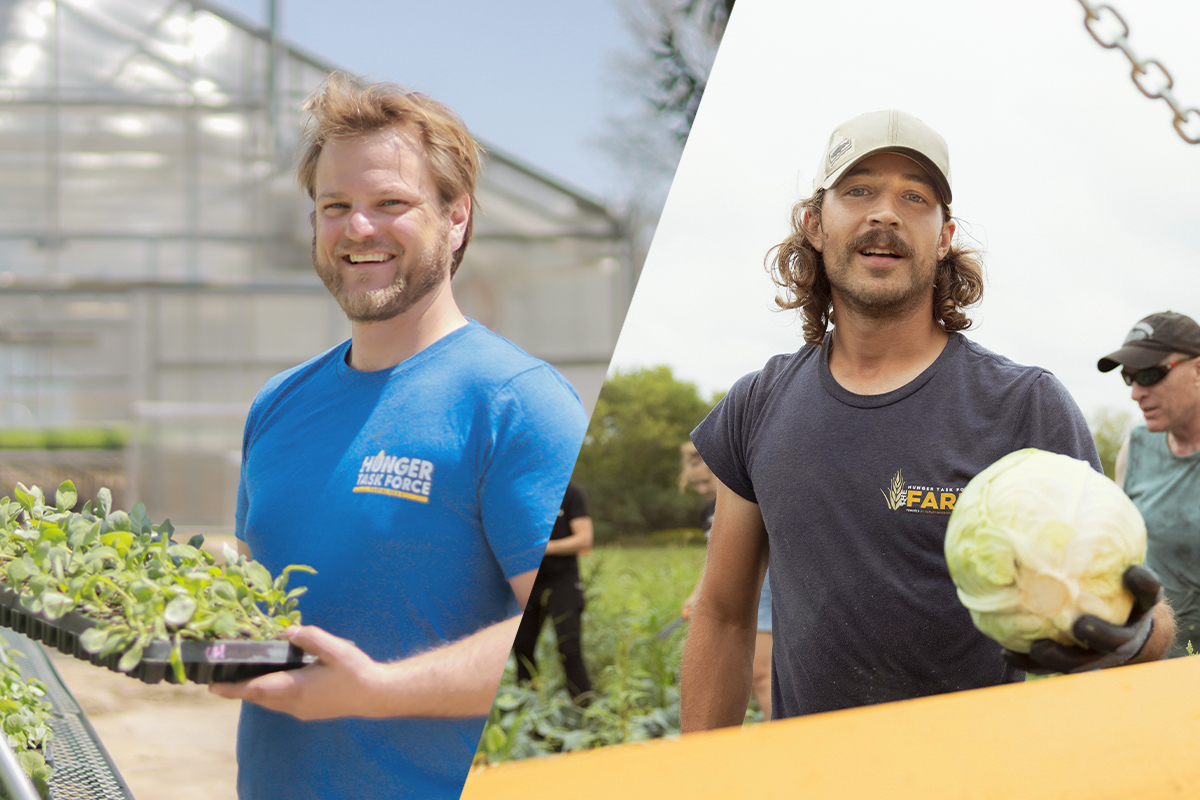
Meet Our Farm Sustainability Experts Adam and Jordan
The Hunger Task Force Farm is a unique source of fresh produce that acts as a lifeline for the community. During the growing season, with help from community volunteers, The Farm harvests hundreds of thousands of pounds of fresh fruits and vegetables that are a welcome addition to our food bank’s offerings.
Sustainability, stewardship of natural areas and regenerative agriculture remain central to The Farm’s operations, with a strong focus on responsible land management and protecting biodiversity. Adam Romanak and Jordan Leitner help lead the charge of prioritizing farming practices that nurture the health of The Farm’s soil and preserve the ecosystem.
Q: When it comes to sustainability at The Farm, what are you most proud of?
Jordan: I am incredibly proud of how seriously sustainability is incorporated into our farming practices and how much we – as a team – work to achieve sustainability goals and enhance our stewardship efforts. One of our priority goals this year has been the reduction of synthetic inputs. It is a continuous goal that we have of increasing our yield and increasing property of soil health while decreasing inputs. We’ve exceeded our goal of reducing our synthetic inputs by 15%, which contributed to the increase in our average yield per acre for corn production.
Adam: For me, our cover cropping program is something to be really proud of. The implementation of cover cropping has not only increased our sustainability and efficiency, but it also has reduced our synthetic inputs and operational costs.
Q: What do you wish people knew about the proactivity we take to operate sustainably and why is it so important for the longevity of The Farm?
Adam: What people might not know about the soil health and the cover cropping and the other side of vegetable production, is that these practices grow better produce. We have several plans – an operational plan, nutrient management plan, applicators plan, etc. – to ensure our crops are plentiful.
Jordan: The building blocks of the season will go back years and years. We have a seven-year crop rotation, which means we look years ahead and ask ourselves what’s going to be in this field in years to come and how can we make this field better. As we continue to build soil health, it’s affecting each season’s crops by lowering pest and disease pressure and increasing nutrient cycling and availability which makes the quality of the crops better. Healthy soils grow healthier, more nutrient dense crops. Soil health affects everything down to the sugar content of the vegetable to make it more nutrient-dense.
Q: What does successful sustainability look like to Hunger Task Force?
Jordan: Well, I can tell you driving around and looking at the fields here this season, I think we’re starting to see what successful, sustainable agriculture production looks like. Through our sustainable practices, we’re seeing beautiful black soil that is full of life, increased soil organic matter and improved nutrient cycling. To me, that’s what we’re doing is all about. We can see it paying off dividends this year and it’s going to only increase from here.
Adam: To me, success looks like leaving the fields and natural areas in a better condition than how we found them.
When asked what their favorite crop is to grow at The Farm, both Adam and Jordan enthusiastically answered, “sweet corn.” The Hunger Task Force Farm grows 25+ varieties of culturally diverse fruits and vegetables to increase the access food insecure households across Milwaukee County have to healthy produce. All crops are distributed free of charge to our local network of food pantries, meal programs and shelters who serve more than 50,000 people each month in need of food assistance across Milwaukee County.
Hunger Task Force is Wisconsin’s anti-hunger leader and Free & Local food bank. The organization’s core values are Dignity, Justice, Equity, Compassion and Stewardship. Hunger Task Force feeds people today by providing healthy and culturally appropriate food to hungry children, families and seniors in the community absolutely free of charge. Hunger Task Force also works to end future hunger by advocating for strong public policies and nutrition programs at the local, state and federal level.